Info Center

Contact Us

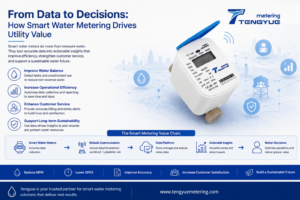
Smart water metering project implementation from pilot to full deployment

Smart Water Metering Project Implementation: From Pilot to Scale

A smart water metering project involves more than replacing traditional meters with digital devices. For water utilities, successful implementation requires coordination between meter selection, communication infrastructure, data platforms, system integration, and daily operational processes. A clear deployment strategy helps reduce project risks and ensures that the new system can support
More
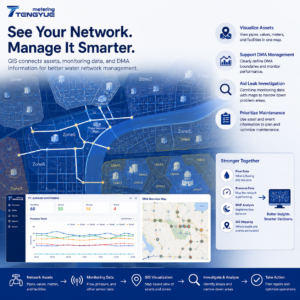
GIS water network management map showing DMA boundaries and pipe routes

GIS Water Network Management: Asset and Leak Guide

GIS water network management connects asset information with geographic locations, helping utilities see where pipes, valves, meters, DMA boundaries, and monitoring points are—and how they relate to operational data. Water distribution networks contain thousands of interconnected assets, including pipelines, valves, meters, pumps, and monitoring devices. For water utilities, understanding where

More
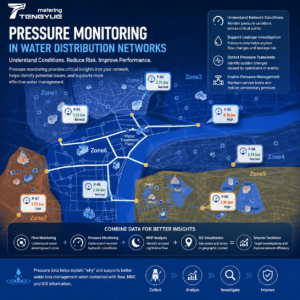
Pressure monitoring in water distribution networks with sensors at DMA boundaries

Pressure Monitoring in Water Distribution Networks

Pressure monitoring in water distribution networks gives utilities a second view of network behavior: not only how much water is moving, but how the network is operating hydraulically. Water flow tells utilities how much water is moving through a network. Pressure provides another important perspective: how the network is operating.

More
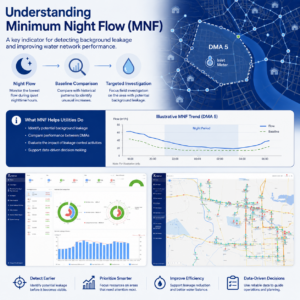
Minimum night flow trend in a DMA showing nighttime baseline and sustained increase

What Is Minimum Night Flow (MNF)? Utility Guide

Minimum night flow (MNF) is the lowest recorded flow entering a defined water distribution area during a selected nighttime period. Water consumption changes throughout the day. In most distribution networks, demand decreases during late-night hours when fewer people and businesses are using water. For water utilities, this quieter period provides

More
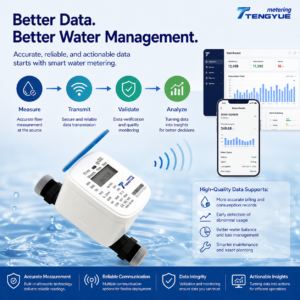
Water meter data quality dimensions for utility data management

Water Meter Data Quality: Why Accurate Data Matters?

Water meter data quality determines whether a utility can trust its readings for billing, consumption analysis, network monitoring, and long-term infrastructure planning. For water utilities, reliable data is the starting point for effective water management. Meter readings influence billing, consumption analysis, network monitoring, and long-term infrastructure planning. However, collecting more

More
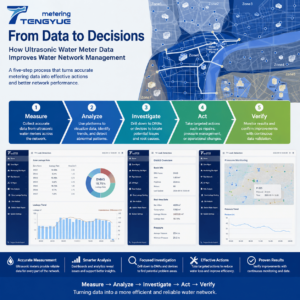
Ultrasonic water meter data supporting water network management and DMA monitoring

How Ultrasonic Water Meter Data Supports Water Network Management

Ultrasonic water meter data can support water network management when it is collected reliably, organized consistently, and interpreted with operational context. Water meters have traditionally been viewed as devices for measuring and recording water consumption. Today, their role is expanding. With remote reading and digital data management, water meter readings

More
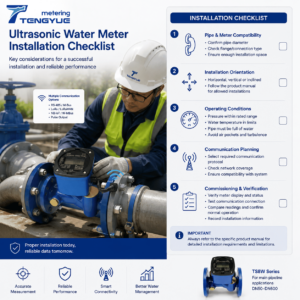
Ultrasonic water meter installation checklist for utility projects

Ultrasonic Water Meter Installation: A Utility Checklist

Ultrasonic water meter installation is more than placing a meter into a pipeline. Selecting the right water meter is only the first step in a successful metering project. Installation conditions can affect the performance, reliability, and long-term operation of a water measurement system. For water utilities, proper installation planning helps

More
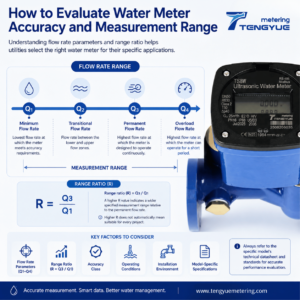
Water meter accuracy and measurement range showing Q1 Q3 parameters

Water Meter Accuracy and Measurement Range: What to Check

Water meter accuracy and range determine whether a meter can measure the flows a utility actually sees—not just the flows on a datasheet. When evaluating a water meter, buyers often focus on nominal diameter and price. However, these two factors alone cannot determine whether a meter is suitable for a

More
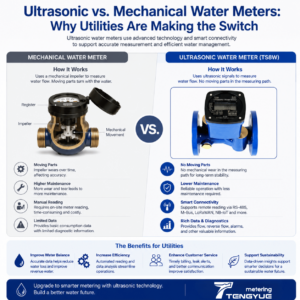
Ultrasonic vs mechanical water meter comparison for utility selection

Ultrasonic vs Mechanical Water Meters: Utility Guide

The choice between an ultrasonic vs mechanical water meter is no longer only a question of purchase price. Water utilities are under increasing pressure to improve measurement accuracy, reduce operational costs, and manage water distribution networks more efficiently. For many years, mechanical water meters have been widely used in residential,

More
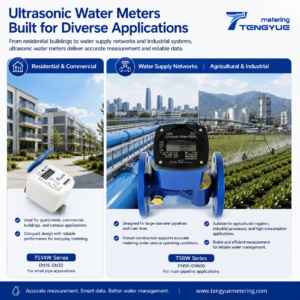
Ultrasonic water meter for utilities installed at a DMA boundary

Ultrasonic Water Meters for Utilities: Key Application Benefits

An ultrasonic water meter for utilities is designed to measure flow electronically, without moving measuring parts in the flow path, and to fit different application conditions across a distribution network. Water utilities operate across different environments, from residential distribution networks to commercial facilities and large water supply pipelines. Each application

More
Smart water metering project success metrics for data availability and reading efficiency

How to Measure the Success of a Smart Water Metering Project

A smart water metering project should be evaluated by more than the number of meters installed. For a water utility, the real value depends on whether the system provides reliable data, improves operational processes, and supports measurable business objectives. Defining the right indicators before deployment makes it easier to evaluate

More
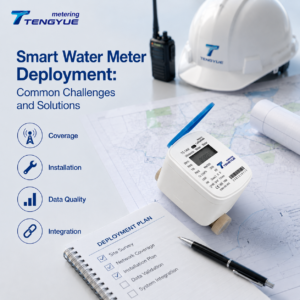
Smart water meter deployment challenges in communication coverage and installation

Smart Water Meter Deployment: Challenges and Solutions

Smart water meter deployment involves more than replacing meters or installing communication devices. The project must also account for site conditions, network performance, data handling, system integration, and the people responsible for operating the solution. Identifying these issues early can help utilities plan a more reliable rollout. A smart water

More
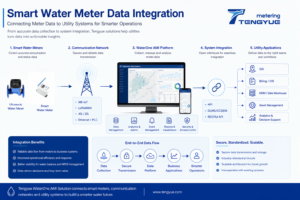
Smart water meter data integration architecture from meter to utility applications

How to Integrate Smart Water Meter Data into Utility Systems

Smart water meter data integration is the process of moving meter readings through a communication network, a data platform, and utility applications so that billing, network operations, maintenance, and planning teams can use the data. Smart water metering projects generate more value when the collected data can be used by

More
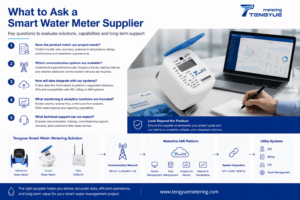
Smart water meter supplier evaluation checklist for utility procurement

What to Ask a Smart Water Meter Supplier: Utility Guide

Choosing a smart water meter supplier is not simply a product comparison. The supplier’s technical documentation, configuration options, communication capabilities, project support, and ability to explain data workflows can all affect the outcome of a deployment. Before placing an order, procurement and engineering teams should ask clear questions and request

More
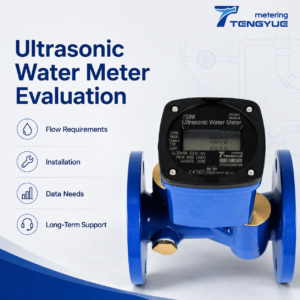
Ultrasonic water meter for utility projects installed at a DMA boundary

Ultrasonic Water Meter for Utility Projects: Buyer’s Guide

Selecting an ultrasonic water meter for utility projects involves more than comparing product prices or nominal diameters. The right choice depends on operating conditions, measurement requirements, installation environment, and how the collected data will be used. Ultrasonic water meters can be suitable for a range of water measurement applications, but

More
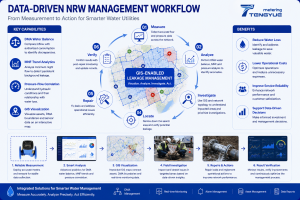
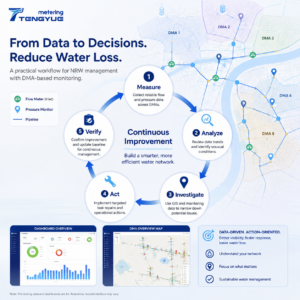
Data-driven NRW management workflow from metering to field verification

NRW Management: A Data-Driven Workflow for Water Utilities

NRW management is the structured process of reducing non-revenue water by connecting measurement, analysis, investigation, and follow-up. Non-revenue water (NRW) is a complex challenge for water utilities. Water losses may be associated with physical leakage, inaccurate measurement, unauthorized consumption, or weaknesses in data and operational processes. Installing meters or collecting

More
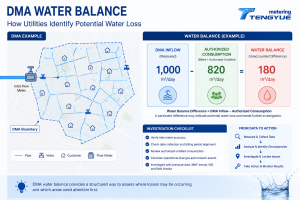
DMA water balance calculation comparing zone inflow with authorized consumption

DMA Water Balance: How Water Utilities Calculate Water Loss

DMA water balance compares measured inflow into a District Metered Area (DMA) with the water accounted for through authorized consumption and other recognized uses within the zone. Water utilities need to understand not only how much water enters a distribution network, but also how much is accounted for through authorized

More
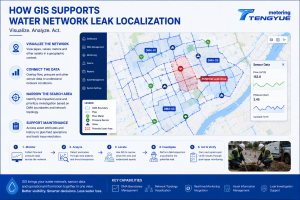
GIS for water network management showing DMA boundaries and pipe routes

GIS for Water Network Management: Leak Localization

GIS for water network management connects asset information with geographic locations, helping utilities see where pipes, valves, meters, and DMA boundaries are—and how they relate to monitoring data. Water distribution networks can extend across large urban areas, with underground pipes, valves, meters, and other assets spread across complex systems. When

More

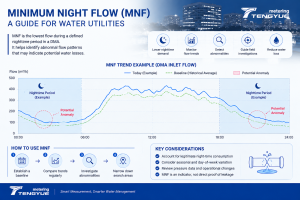
What Is Minimum Night Flow (MNF) in Water Networks?

Minimum night flow (MNF) is the lowest measured flow during a defined nighttime period in a monitored area, such as a District Metered Area (DMA). Water demand usually changes throughout the day, and in many distribution networks consumption falls during nighttime hours. This makes nighttime flow an important indicator for

More

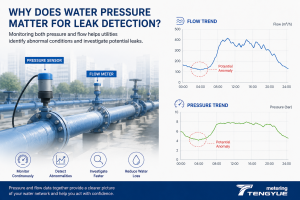
Why Does Water Pressure Matter for Leak Detection?

Water utilities often monitor how much water enters a distribution network. But flow data alone may not explain why water losses occur or where an investigation should begin. Water pressure provides another important piece of the picture. How Does Pressure Affect a Water Distribution Network? Pressure changes throughout a water

More