
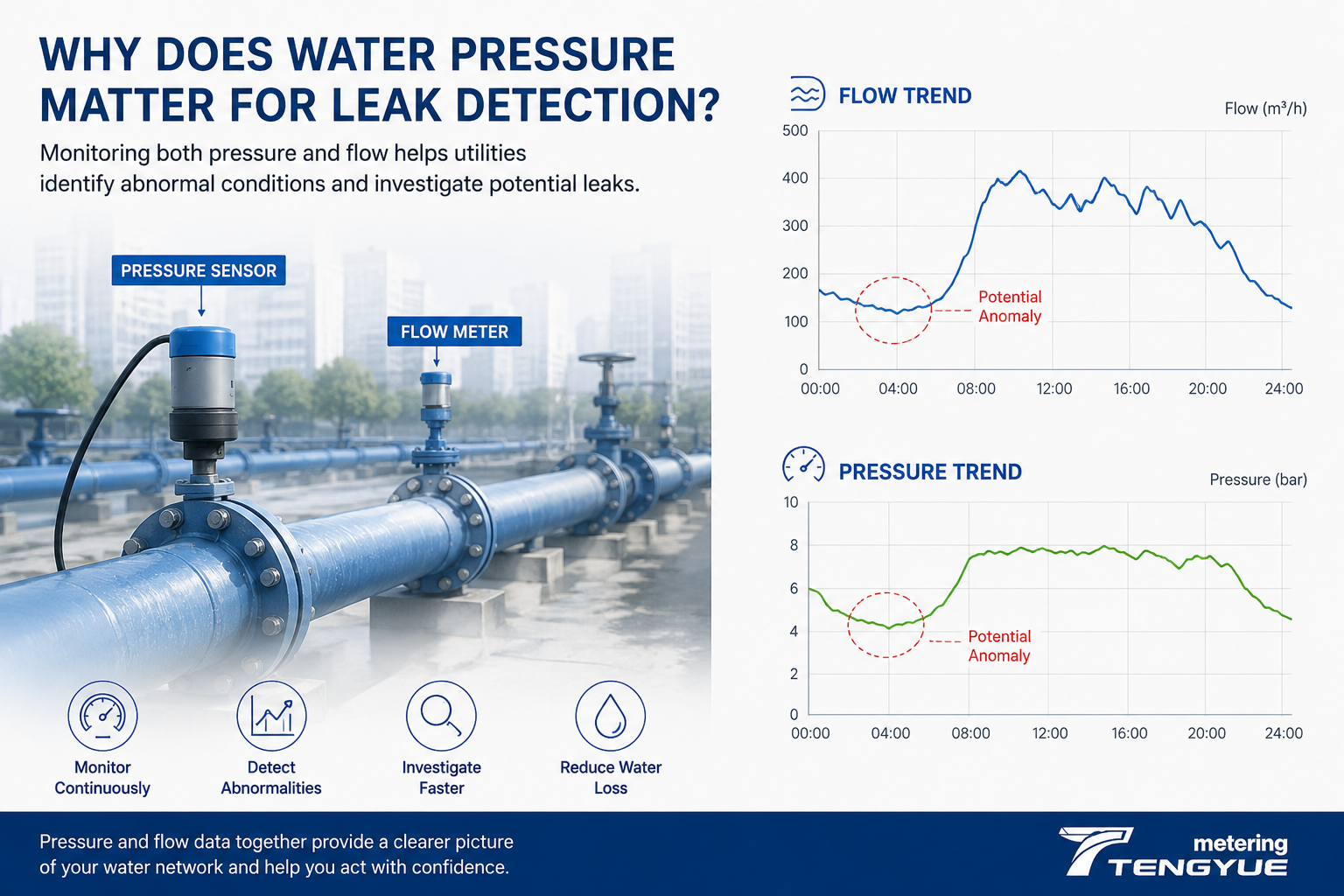
Water utilities often monitor how much water enters a distribution network. But flow data alone may not explain why water losses occur or where an investigation should begin.
Water pressure provides another important piece of the picture.
How Does Pressure Affect a Water Distribution Network?
Pressure changes throughout a water network as demand varies, pumps operate, valves adjust, and network conditions change.
- Unusual pressure patterns may indicate operational problems, including:
- Unexpected pressure drops
- Sudden pressure transients
- Persistent pressure differences between zones
- Pressure conditions that may contribute to pipe stress or bursts
These patterns do not automatically confirm a leak. They help utility teams identify conditions that deserve closer investigation.
Why Combine Pressure and Flow Data?
Flow data shows how much water moves through a monitored point. Pressure data helps explain the hydraulic conditions under which that flow occurs.
When both datasets are reviewed together, utilities can investigate abnormal patterns more effectively.
For example, a change in DMA inflow accompanied by an unusual pressure pattern may justify checking the affected zone, reviewing recent operational changes, and comparing the readings with historical data.
The interpretation depends on the network layout, sensor locations, normal operating conditions, and data quality.
From Monitoring to Action
A practical pressure-monitoring workflow can include:
Measure: Collect flow and pressure data at selected network points.
Compare: Identify deviations from expected operating patterns.
Investigate: Review the affected DMA, operational records, and related measurements.
Locate: Use network maps and additional field checks to narrow the search area.
Verify: Confirm the suspected problem before arranging repairs or operational adjustments.
Supporting Smarter NRW Management
Pressure monitoring is most useful when it forms part of a wider water-loss management process. DMA water balance, minimum night flow (MNF) analysis, and GIS-based network visualization can provide additional evidence for investigation and prioritization.
TY Leakage Monitoring combines flow and pressure analysis with DMA management and GIS visualization to support more structured leakage investigations.
The objective is not simply to collect more data. It is to help water utilities turn monitoring results into informed operational decisions.
Want to improve visibility across your water distribution network? Explore how an integrated approach to metering, pressure monitoring, and leakage analysis can support your NRW management objectives.