Centro de Informações

Contate-nos

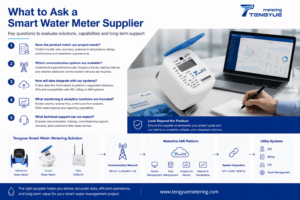
Smart water meter supplier evaluation checklist for utility procurement

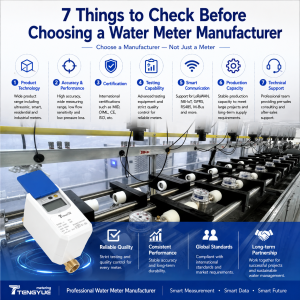
What to Ask a Smart Water Meter Supplier: Utility Guide

Choosing a smart water meter supplier is not simply a product comparison. The supplier’s technical documentation, configuration options, communication capabilities, project support, and ability to explain data workflows can all affect the outcome of a deployment. Before placing an order, procurement and engineering teams should ask clear questions and request
Mais
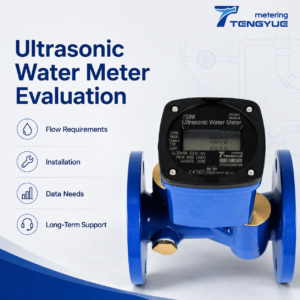
Ultrasonic water meter for utility projects installed at a DMA boundary

Ultrasonic Water Meter for Utility Projects: Buyer’s Guide

Selecting an ultrasonic water meter for utility projects involves more than comparing product prices or nominal diameters. The right choice depends on operating conditions, measurement requirements, installation environment, and how the collected data will be used. Ultrasonic water meters can be suitable for a range of water measurement applications, but

Mais
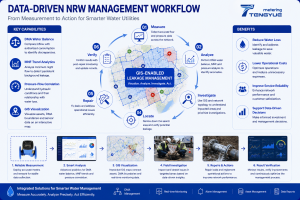
Data-driven NRW management workflow from metering to field verification

NRW Management: A Data-Driven Workflow for Water Utilities

NRW management is the structured process of reducing non-revenue water by connecting measurement, analysis, investigation, and follow-up. Non-revenue water (NRW) is a complex challenge for water utilities. Water losses may be associated with physical leakage, inaccurate measurement, unauthorized consumption, or weaknesses in data and operational processes. Installing meters or collecting

Mais
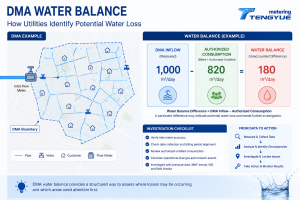
DMA water balance calculation comparing zone inflow with authorized consumption

DMA Water Balance: How Water Utilities Calculate Water Loss

DMA water balance compares measured inflow into a District Metered Area (DMA) with the water accounted for through authorized consumption and other recognized uses within the zone. Water utilities need to understand not only how much water enters a distribution network, but also how much is accounted for through authorized

Mais
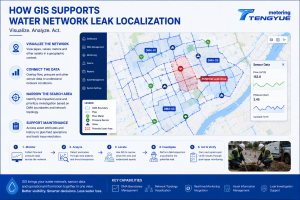
GIS for water network management showing DMA boundaries and pipe routes

GIS for Water Network Management: Leak Localization

GIS for water network management connects asset information with geographic locations, helping utilities see where pipes, valves, meters, and DMA boundaries are—and how they relate to monitoring data. Water distribution networks can extend across large urban areas, with underground pipes, valves, meters, and other assets spread across complex systems. When

Mais

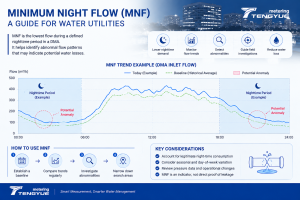
What Is Minimum Night Flow (MNF) in Water Networks?

Minimum night flow (MNF) is the lowest measured flow during a defined nighttime period in a monitored area, such as a District Metered Area (DMA). Water demand usually changes throughout the day, and in many distribution networks consumption falls during nighttime hours. This makes nighttime flow an important indicator for

Mais

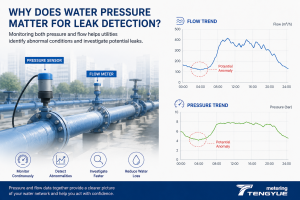
Why Does Water Pressure Matter for Leak Detection?

Water utilities often monitor how much water enters a distribution network. But flow data alone may not explain why water losses occur or where an investigation should begin. Water pressure provides another important piece of the picture. How Does Pressure Affect a Water Distribution Network? Pressure changes throughout a water

Mais

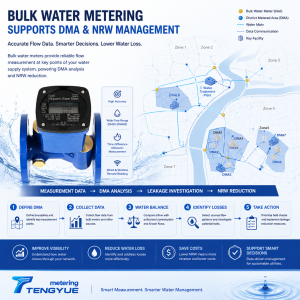
Bulk Water Metering for DMA and NRW Management

For water utilities, reducing non-revenue water (NRW) requires more than installing accurate meters. Utilities also need reliable information about how water enters and moves through the distribution network. Bulk water metering can provide important flow data at key points in a water supply system. When used alongside district metered areas

Mais

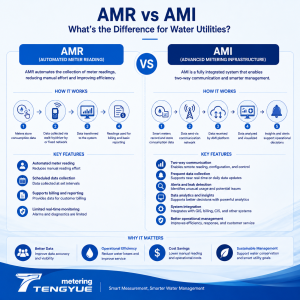
AMR vs. AMI: What Is the Difference for Water Utilities?

Water utilities are increasingly looking for ways to improve meter reading, access consumption data, and identify potential problems earlier. Two common terms in smart metering projects are AMR and AMI. Although both help automate water meter data collection, they can differ in communication capabilities, system architecture, and the way utilities

Mais

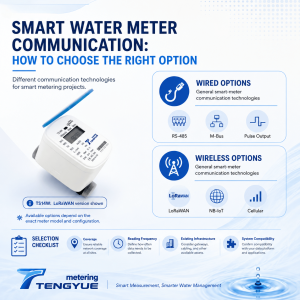
Smart Water Meter Communication: How to Choose the Right Option

Small-diameter water meters are commonly considered for residential, commercial, and other applications where water consumption needs to be measured at individual connections or smaller service lines. When evaluating a small-diameter ultrasonic water meter, buyers should look beyond the nominal diameter. The right choice depends on the expected flow profile, installation

Mais

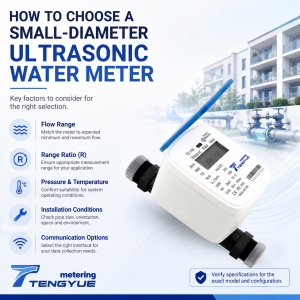
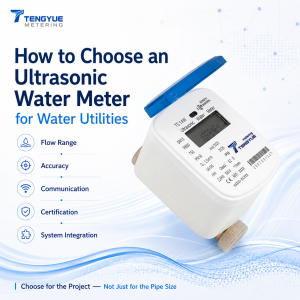
How to Choose a Small-Diameter Ultrasonic Water Meter

Small-diameter water meters are commonly considered for residential, commercial, and other applications where water consumption needs to be measured at individual connections or smaller service lines. When evaluating a small-diameter ultrasonic water meter, buyers should look beyond the nominal diameter. The right choice depends on the expected flow profile, installation

Mais
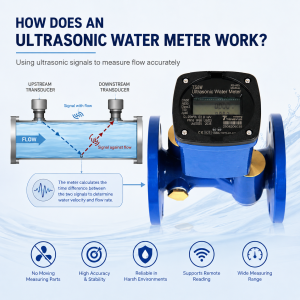
How an ultrasonic water meter measures water flow using ultrasonic signals

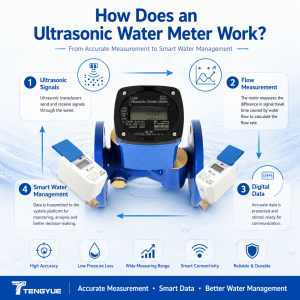
Ultrasonic Water Meter Working Principle: A Simple Guide

How Does an Ultrasonic Water Meter Work? Water utilities need reliable measurement data to manage consumption, monitor distribution networks, and make informed operational decisions. Ultrasonic water meters offer an electronic approach to flow measurement without the moving measuring parts found in many traditional mechanical meters. But how does an ultrasonic

Mais

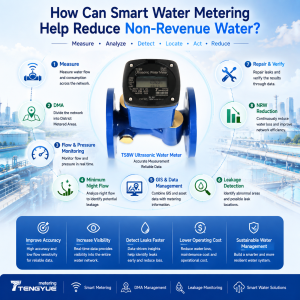
How Can Smart Water Metering Help Reduce Non-Revenue Water?

For water utilities, producing and distributing water is only part of the challenge. The next question is: How much of that water actually reaches customers and becomes authorized consumption? Water lost between production and consumption is a major concern for utilities around the world. This is where non-revenue water (NRW)

Mais

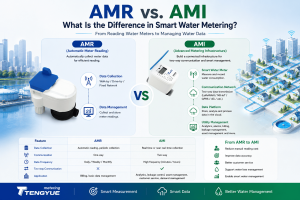
AMR vs. AMI: What Is the Difference in Smart Water Metering?

As water utilities move toward digital transformation, traditional manual meter reading is gradually being replaced by automated data collection. Two terms frequently appear in smart water metering projects: AMR and AMI. They are closely related, but they represent different levels of metering infrastructure. Understanding the difference can help water utilities,

Mais

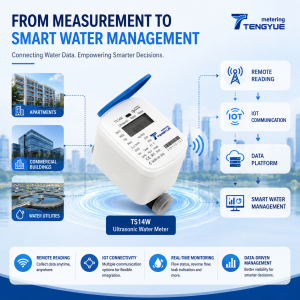
How Can an Ultrasonic Water Meter Become a Connected Device?

A water meter has traditionally had one primary job: measure how much water passes through a pipeline. But water management is becoming increasingly data-driven. For utilities, property managers, and commercial water operators, knowing the total consumption is useful. Knowing when water is being consumed, how flow conditions are changing, and

Mais