
Water utilities are increasingly looking for ways to improve meter reading, access consumption data, and identify potential problems earlier.
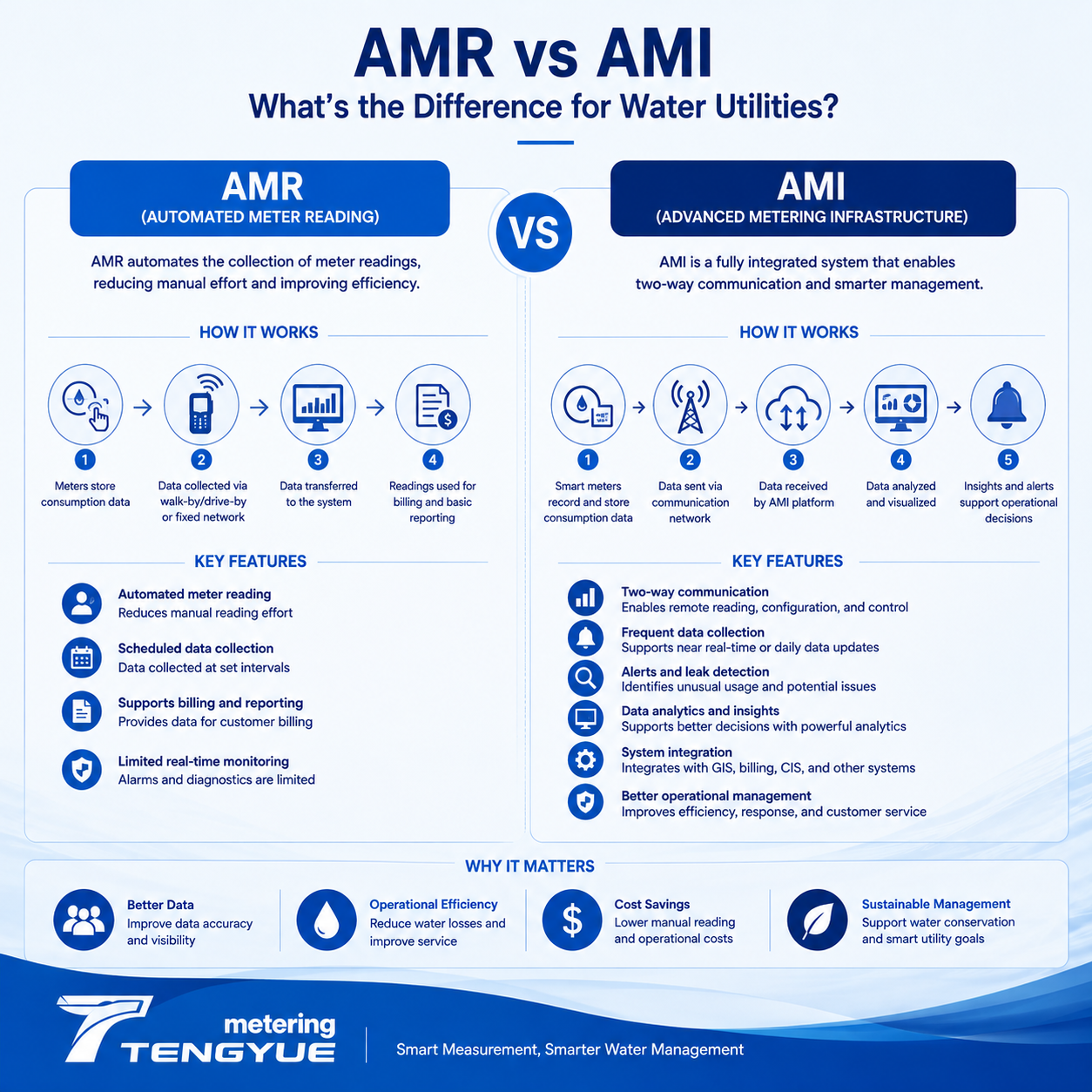
Two common terms in smart metering projects are AMR and AMI. Although both help automate water meter data collection, they can differ in communication capabilities, system architecture, and the way utilities use the collected data.
1. What Is AMR?
AMR stands for Automated Meter Reading.
An AMR system automates the collection of meter readings, reducing the need for staff to visit every meter and record readings manually. Depending on the system design, readings may be collected through mobile reading equipment or a fixed collection network.
AMR can help utilities streamline meter reading, support billing operations, and reduce manual data collection work.
However, the capabilities of an AMR system depend on the communication method and equipment selected. Automated reading does not necessarily mean that a utility has access to continuous monitoring or remote control.
2. What Is АМИ?
AMI stands for Advanced Metering Infrastructure.
AMI is a broader system that combines metering devices, communication networks, and data management software. Depending on the architecture, it can support more frequent data collection, remote access to meter information, and integration with other utility systems.
The US Environmental Protection Agency explains that AMI can help water utilities collect frequent and accurate water usage data to support billing, leak detection, and water resource management.
For a water utility, the value of AMI is not simply that readings are collected automatically. It is also that the data can be organized and analyzed to support operational decisions.
3. AMR vs. AMI: Key Differences
Data collection
AMR focuses on automating meter reading. AMI can support a more integrated data collection and management process, depending on the selected system.
Monitoring frequency
The reading frequency of either system depends on the meter, communication network, and system configuration. AMI projects may be designed for more frequent data collection, but the actual interval must be confirmed for the proposed solution.
Data analysis
AMR can provide readings for billing and basic reporting. An AMI platform may offer additional functions such as consumption trend analysis, meter status monitoring, and alerts, where these functions are included.
System integration
An AMI project may connect meter data with other utility systems, such as customer information or geographic information systems. The available integration depends on the platform’s interfaces and the utility’s existing infrastructure.
4. Which Is Right for Your Water Utility?
The right choice depends on your objectives and starting point.
AMR may be appropriate when the main goal is to automate reading and reduce manual work.
AMI may be worth evaluating when the utility also wants more frequent data, broader monitoring, analytics, or integration with other operational systems.
Before making a decision, assess the existing meter inventory, communication coverage, required reading frequency, data platform, integration needs, cybersecurity requirements, and total project cost.
5. How Does AMI Support Smarter Water Management?
Meter readings become more valuable when they can be used alongside other operational information.
Depending on system capabilities and data quality, AMI data can help utilities review consumption patterns, identify unusual usage, investigate potential leaks, and improve the visibility of water distribution and customer consumption.
An AMI system is not a substitute for every form of network monitoring. For distribution-network NRW management, utilities may also need bulk metering, DMA analysis, pressure monitoring, GIS information, and field investigation.
AMR and AMI both support the modernization of water metering, but they serve different levels of operational need. AMR focuses on automated reading, while AMI can provide a more integrated infrastructure for collecting and using metering data.
Тэнюэ TY WaterOne AMI solution combines smart metering devices, communication infrastructure, and data analytics. Contact our team to discuss how an AMI project could fit your utility’s operational objectives.