
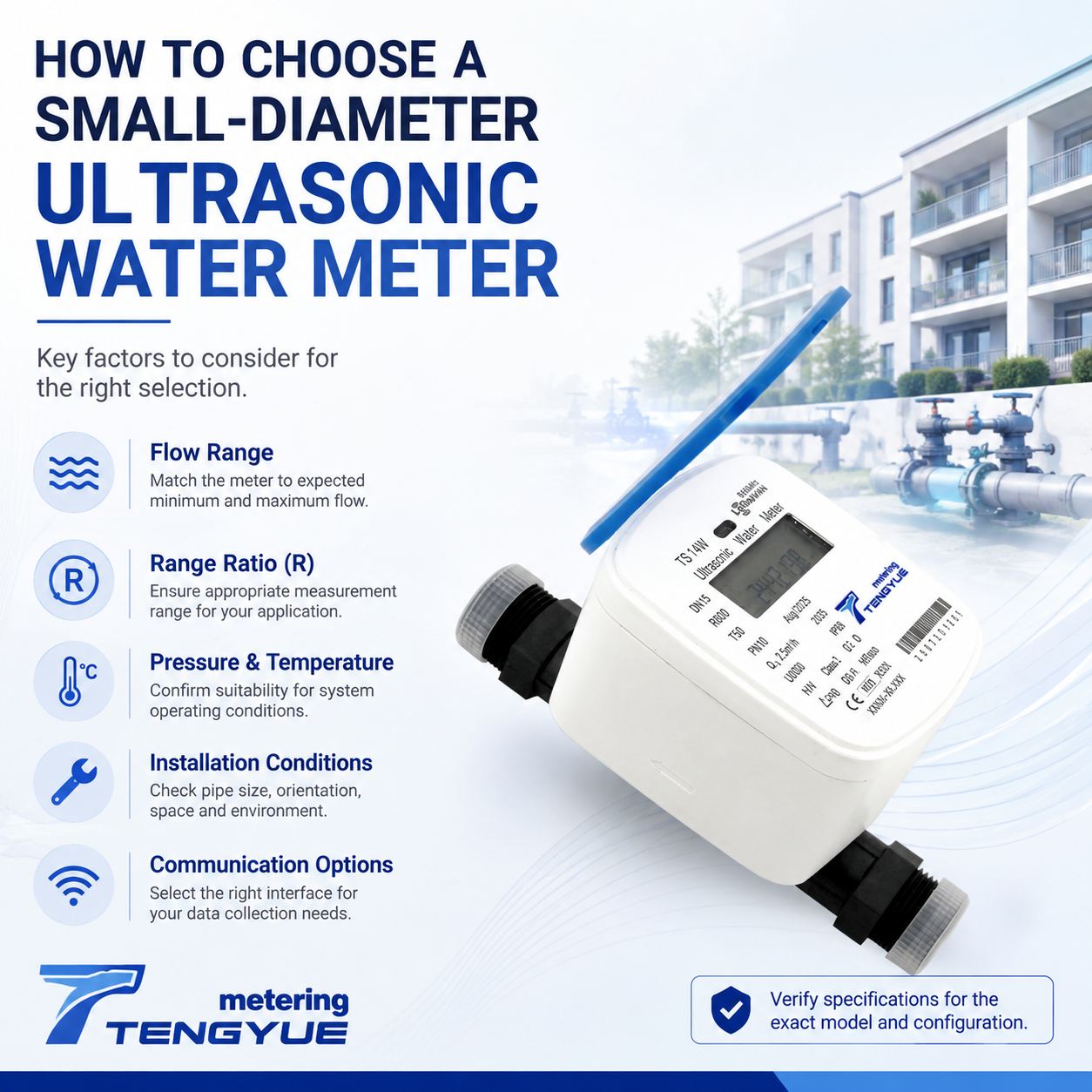
Small-diameter water meters are commonly considered for residential, commercial, and other applications where water consumption needs to be measured at individual connections or smaller service lines.
When evaluating a small-diameter medidor de água ultrassônico, buyers should look beyond the nominal diameter. The right choice depends on the expected flow profile, installation conditions, communication requirements, and project specifications.
1. Start with the Application
First, identify where the meter will be installed.
Is the project intended for residential water consumption, commercial buildings, individual customer connections, or another application?
The answer affects the required diameter, flow range, connection type, operating conditions, and data collection method.
A meter should be selected according to the actual application rather than diameter alone.
2. Check the Flow Range and Range Ratio
The flow range is one of the most important selection factors.
Review the project’s expected minimum flow, normal operating flow, and maximum flow. Then compare these requirements with the meter’s documented Q1, Q2, Q3, and Q4 values, where applicable.
The range ratio, commonly expressed as R, describes the relationship between permanent flow rate and minimum flow rate under the applicable specification. A higher range ratio can indicate a wider specified measurement range, but it does not replace the need to check the meter’s full performance requirements.
Do not compare range ratios without confirming the applicable model, diameter, and configuration.
3. Confirm Pressure and Temperature Requirements
The meter must be suitable for the system’s operating pressure and water temperature.
Before ordering, check the rated pressure class and temperature class in the product documentation. If the project has special operating requirements, confirm them with the supplier before specifying the meter.
4. Review Installation Conditions
Installation can influence metering performance and long-term reliability.
Check the following:
- Pipe size and connection dimensions.
- Horizontal or vertical installation requirements.
- Available installation space.
- Upstream and downstream pipe conditions.
- Whether the pipe is expected to remain full during normal operation.
- Environmental and ingress-protection requirements.
- Use the installation instructions for the exact meter model rather than applying assumptions from another product.
5. Choose the Right Communication Option
For smart metering projects, communication requirements should be defined early.
Some meters provide wired communication, while others support specific wireless technologies. The available options vary by model.
Consider network coverage, reading frequency, infrastructure availability, integration requirements, and the utility’s data management system.
For example, the TS14W product manual documents LoRaWAN communication for the specified version. Other communication options should not be assumed unless they are confirmed for the exact model and configuration.
6. Compare the Complete Project Requirements
Before making a final decision, prepare a checklist covering:
- Nominal diameter and connection type.
- Required flow range and range ratio.
- Accuracy and applicable certification.
- Pressure and temperature classes.
- Installation and protection requirements.
- Communication and data collection needs.
- Maintenance, expected service life, and total project cost.
Selecting a small-diameter ultrasonic water meter is a process of matching technical specifications to the real application. A clear project requirement list helps buyers compare products more accurately and avoid choosing a meter based on one specification alone.
Tengyue Metering offers small-diameter ultrasonic water meter options, including the TS14W series. Contact our team to confirm the specifications and communication configuration that match your project.