As the European Union pushes toward its 2035 energy efficiency targets, smart water meters are rapidly moving from niche technology to critical infrastructure. Driven by regulations such as the EU Energy Efficiency Directive and Directive (EU) 2019/944, Europe is accelerating its adoption of digital systems that enable transparent, efficient, and data-driven resource management. For manufacturers like TengyueMetering, this shift is not just a market trend—it is a clear signal that water and energy efficiency must be addressed together.
The market numbers confirm this momentum. The European smart water metering market was valued at USD 2.2 billion in 2025, expected to grow to USD 2.9 billion in 2026, and projected to reach USD 20.3 billion by 2035, representing a compound annual growth rate (CAGR) of 23.9%. One of the most powerful drivers behind this growth is the urgent need to reduce Non-Revenue Water (NRW). Today, Europe loses over 20% of its treated water annually—a staggering inefficiency that leads to major financial losses and unnecessary energy consumption in water treatment and distribution. Smart water meters with real-time monitoring and leak detection capabilities can reduce NRW by up to 30%, directly cutting energy waste.
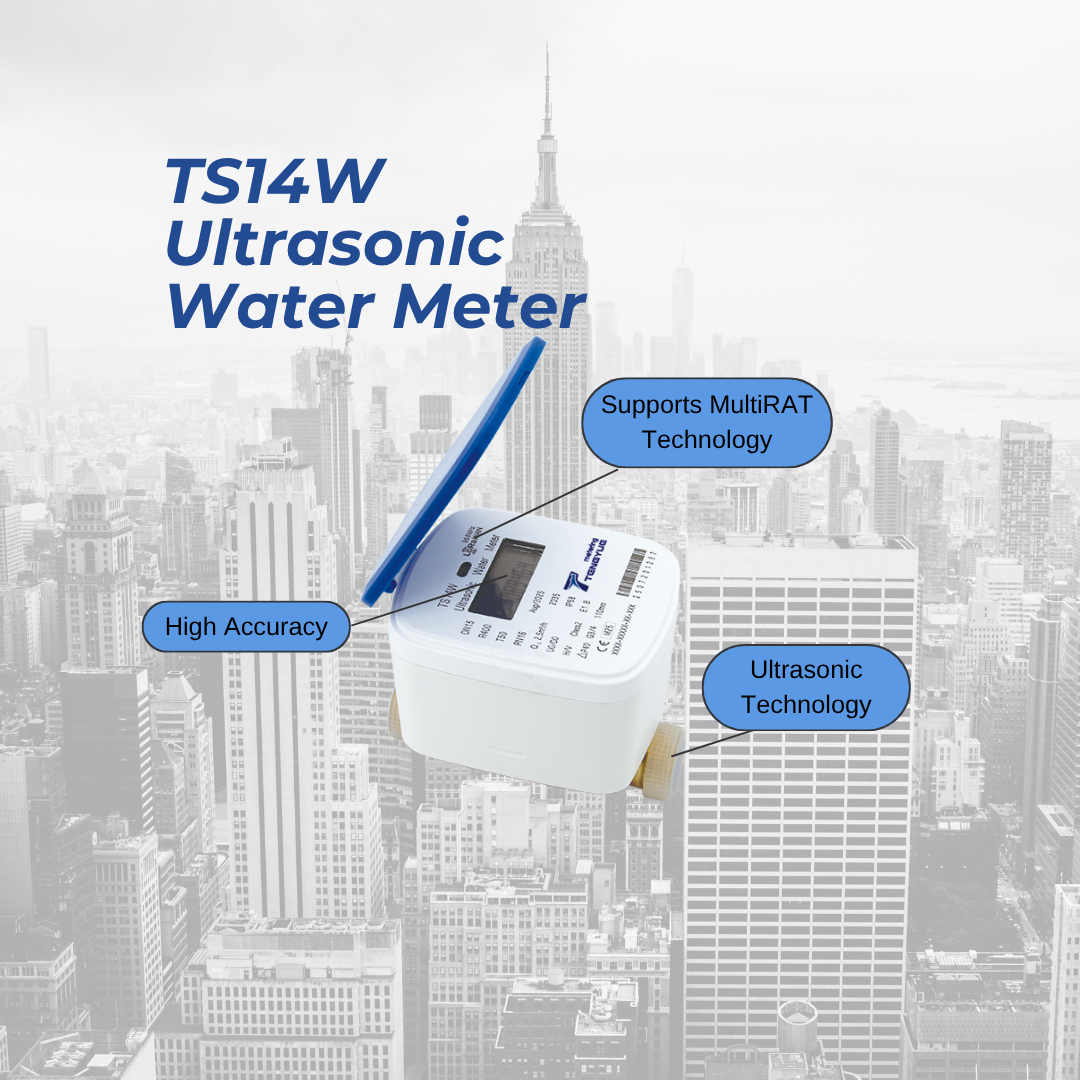
At TengyueMetering, we contribute to this transformation through practical, high-performance metering solutions. Our Medidor de água inteligente ultrassônico TS14W, for example, delivers high-precision measurement and continuous monitoring. It supports MultiRAT technology, including NB-IoT, Wireless M-Bus, and LoRaWAN, ensuring compatibility with most modern remote monitoring systems. Our Intelligent Power Source architecture combines internal and external power modules, enhancing reliability even in challenging operating environments. With an extremely low starting flow rate of just 1 liter per hour, the TS14W can detect minimal consumption and hidden leaks that traditional meters miss—significantly improving both measurement accuracy and overall system efficiency.
By integrating real-time data, alert systems, and IoT connectivity, smart water meters help utilities optimize operations, reduce losses, and improve consumption transparency. As 2035 approaches, these devices are no longer simple measurement tools—they are strategic components of Europe’s digital infrastructure, directly supporting the EU’s energy efficiency and sustainability goals. For manufacturers like TengyueMetering, the mission is clear: continue innovating to make every drop of water and every watt of energy count.